Nº 08 · · 3 min read
Investigate Phase: What Our Research Revealed
Six parts, 97 pages, one conclusion: the technology already exists — what is missing is the educational layer on top of it.
“The challenge is set. Now we investigate.” A few weeks after our Engage presentation, the investigation is written up: a consolidated report of 97 pages, in six parts, one led by each member of the team.
How we split the work
- Part 1 — Context & Problem Structuring, written by the whole team
- Part 2 — Data Study, by Maryem Ouichka
- Part 3 — Techniques, Tools & Limits, by Med Rayen Ayat (evidence review) and Islem Tellili (hands-on testing)
- Part 4 — Guiding Activities & Resources, by Malek Tirellil
- Part 5 — Legal, Ethical & Market Study, by Youssef Jouini
- Part 6 — Synthesis & Objective Tree, by Yassmine Nouisser
The problem, sharpened
During Engage, we described what students live. The investigation turned it into one sentence:
Learners have access to content but not to understanding: when they are stuck, they cannot ask the best teachers a question, privately, at the moment they need it, in their own language — unless they can pay for it.
The figures behind it are hard to ignore. In Tunisia, 67% of families pay for private lessons — about 1,468 million TND a year (FTDES 2023). Worldwide, 2.2 billion people are still offline (ITU 2025). And on edX, course completion fell to about 3%.
What we found
The barrier is availability, not distance. Video calls removed distance years ago; they never multiplied a teacher’s time.
The technology exists — for business. Platforms like D-ID and Tavus already sell real-time talking avatars that answer from documents. But of the 26 tools we compared, none combines a mentor’s face and voice with pedagogy, a model of what the student knows, or a link back to the real professor.
Design decides whether AI helps. In a large study, students using unguarded GPT-4 scored 17% lower on exams once the tool was removed — while a guardrailed tutor avoided the loss (Bastani et al., PNAS 2025).
Trust is a requirement, not an option. Since August 2026, users must be told they are talking to an AI; emotion recognition is banned in education; a professor’s face and voice are biometric data that need explicit consent.
Our objective tree
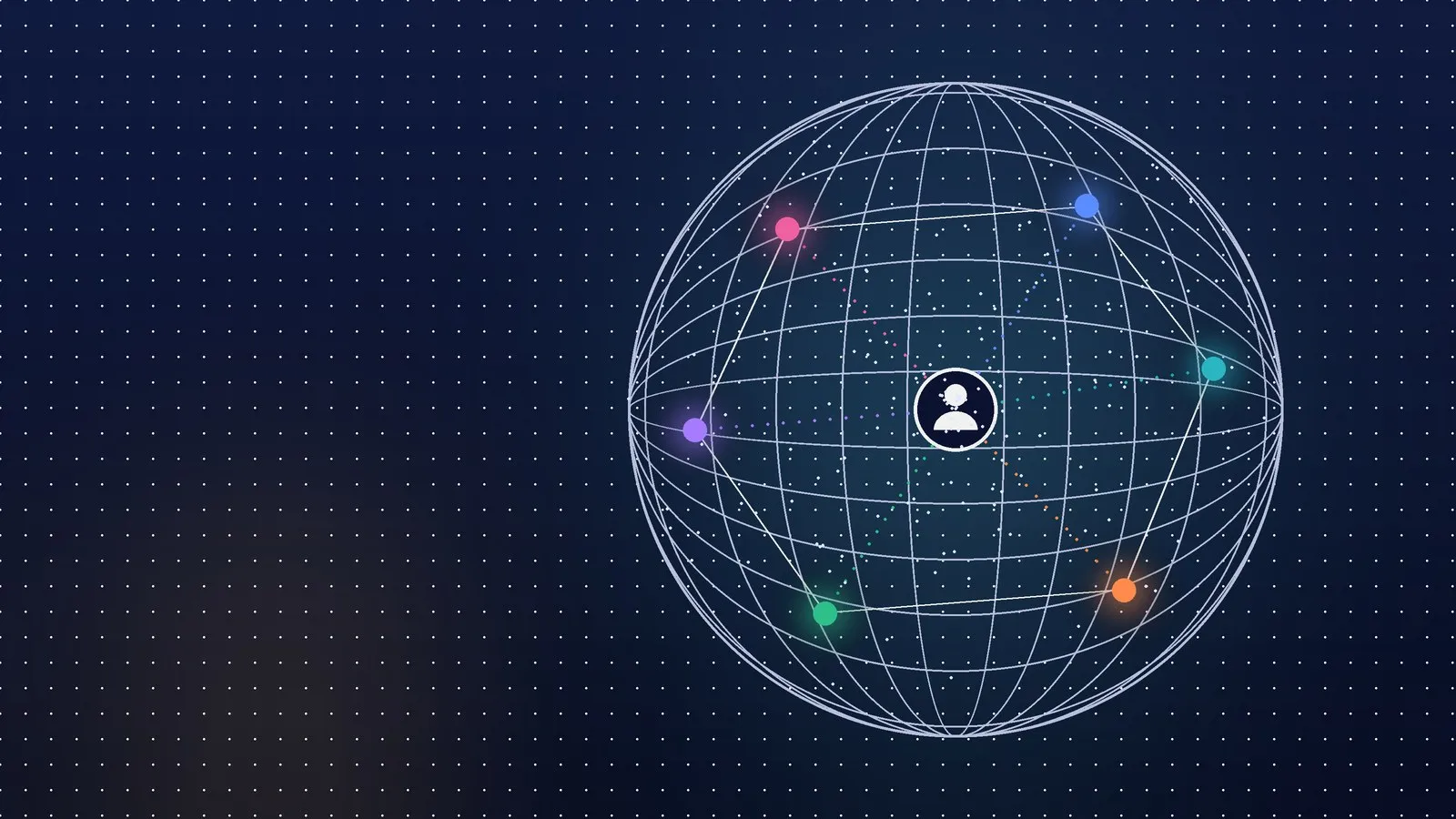
The synthesis organises everything into one tree: a main objective — make the best knowledge available to every learner, wherever and whenever they are — supported by three pillars and six multimodal modules: Voice & Audio, Language & Knowledge, Face & Video, Multilingual, Adaptive Personalization and Content Generation. Underneath, six enablers: consent and liveness check, a visible “This is an AI” label, teacher review and hand-off, a low-bandwidth mode, Derja and multimodal data, and data protection.
What’s next
Desk research is done; field work starts now. A student survey, interviews with professors, an AI expert, a lawyer and an educator, and seven experiments — including the one that matters most: an A/B test comparing a classic lecture video with an interactive avatar.
Explore the full results in the Investigate tab of our CBL journey, where you can also download the complete PDF.
#investigate#cbl#research#synthesis
Enjoyed this chapter? Follow the journey day by day on Instagram.
@fbais.esprit