
Challenge Based Learning
Engage. Investigate. Act.
Our project follows the Challenge Based Learning framework: three phases that take us from a big idea to a real solution.
01
Engage
From a Big Idea to an Essential Question, then to a concrete, actionable Challenge.
02
Investigate
Guiding questions, activities and resources to build a deep understanding and a solid foundation for the solution.
03
Act
Develop the solution, implement it with a real audience, and evaluate the results.
Interactive journey
Follow our path phase by phase.
Select a phase to explore it. Engage is complete, Investigate is under way — Act unlocks next.
The Big Idea
The Knowledge Revolution
Humanity has gone through several revolutions in how it shares knowledge. The next one is about bringing the best teachers and minds to every learner, personally.

Deliverables
What the Engage phase produced
- Engage phase presentation to our supervisors, Mr. Safouane Jebali and Mrs. Wided Askri
- Call-to-action video
- Social media launch: Instagram @fbais.esprit with a 4-pillar content strategy (The Project, Educate, Engage, Behind the Scenes)
- Potential partner identified: Indiana University
“The challenge is set. Now we investigate.”
Consolidated report · v3 · 6 October 2026 · 97 pages
The technology to give every learner a face-to-face mentor already exists; what is missing is the educational layer on top of it — pedagogy, sources, a learner model, consent, transparency, a human behind the avatar, and an access model that fits Tunisian students.
Reference platform: BEAI™ Studio — Agent & Digital-Twin Creation Platform · partner: Fawzi Ben Messaoud
- 01Context & Problem StructuringAll membersTeam review
- 02Data StudyMaryem OuichkaComplete
- 03Techniques, Tools & LimitsMed Rayen Ayat · Islem TelliliComplete
- 04Guiding Activities & ResourcesMalek TirellilComplete
- 05Legal, Ethical & Market StudyYoussef JouiniComplete
- 06Synthesis & Objective TreeYassmine NouisserProvisional
Investigate · Step 01
Guiding questions.
Part 1 — written by the whole team — turned our challenge into a structured problem, then into questions to answer.
Central problem
Learners have access to content but not to understanding: when they are stuck, they cannot ask the best teachers and experts a question, privately, at the moment they need it, in their own language — unless they can pay for it.
Context
- Content everywhere, online
- 44 M teachers missing by 2030
- 2.2 B people offline
- 67% of Tunisian families pay for private lessons
- Students already use AI (95%), institutions lag (38%)
- Avatars + AI exist, built for business
- AI Act: transparency, no emotion recognition
Root causes
- Teacher time does not scale
- Help is a private, paid market
- Little Derja data, weak AI
- Fluent but unreliable AI
- Fragmented tools, no link to the real teacher
- Weak connectivity
Impact
- Confusion never resolved
- Online drop-out (edX completion ≈ 3%)
- Success tied to income (1,468 M TND / year)
- Learning poverty ≈ 70% in LMICs
- Unsupervised AI use: −17% exam grades
- Regional inequality, SDG 4 at risk
- GQ-C1How do learners access teachers, mentors, experts and resources today?Context
- GQ-P1What prevents learners from getting answers from the best teachers when they need them?Problem
- GQ-P2Why do recordings, MOOCs, chatbots and avatar platforms not solve it?Problem
- GQ-K1Which human, economic, geographic, linguistic and technical factors create the problem, and how do they interact?Causes
- GQ-S2Under which conditions would professors agree to a digital version of themselves?Stakeholders
- GQ-D1What data exists on learners, courses, languages and access, and what is missing?Data
- GQ-T1Which techniques and tools exist, and why are they not enough?Techniques
- GQ-L1Which rules apply to biometric data, minors, transfers abroad and AI transparency?Legal & ethics
- GQ-M1Who needs this most, and what already exists?Market
- GQ-V1Does an interactive mentor help students learn better than a video or a text chatbot?Value
Where the answers stand
- Covered
- 10
- Partial
- 8
- Pending
- 5
23 questions in total (plan level and module level). The pending ones need experimental results, not more desk research.
Investigate · Step 02
Guiding activities & resources.
24 activities across the five CBL types (Part 4), the data we studied (Part 2) and the tools we tested hands-on (Part 3).
- Simulations & Games3
Wizard of Oz · “Real or AI?” game · perceived-latency simulation
- Experiments7
Voice cloning · lip-sync · RAG on a real course · speech translation · avatar expressions · generated content · teaching A/B test
- Interviews & Surveys5
Student survey (100+ answers) · professors · AI expert · lawyer / INPDP · educator
- Projects & Problem Sets4
Mini-prototypes · latency budget · GPU sizing · usability test (SUS)
- Field Research5
Real study places · connection quality · lecture observation · course collection · platform benchmark
Key experiment · EX7
A teaching A/B test: two groups of at least 15 students — a classic 10-minute lecture video vs the same content with the interactive avatar — then the same 10-question quiz. The first measured evidence of the project’s teaching value.
Digital media
arXiv, Google Scholar, Hugging Face, GitHub, Colab & Kaggle, D-ID and Tavus docs, LiveKit, MediaPipe
Textbooks & articles
Whisper, RAG, Wav2Lip, Seamless, NLLB, Bloom’s taxonomy, the EU AI Act, Tunisian Law 2004-63
Human experts
Supervising professors, AI and vision teachers, Derja NLP researchers, INPDP, a digital-law specialist, educators
Networks
Classmates, alumni, student clubs (IEEE, GDG, AI clubs), Hugging Face and LiveKit communities
We tested the tools. None covers everything.
26 tools compared on documented evidence (42 references) and 7 tested hands-on. Educational tools have the pedagogy; avatar tools have the face and the voice — never both.
| Tool | Course-grounded knowledge | Mentor persona | Real-time voice | Avatar | Learner model | Socratic pedagogy | Institutional identity control | Learning analytics |
|---|---|---|---|---|---|---|---|---|
| Educational tools | ||||||||
| Quizlet | Partly covered | Not covered | Not covered | Not covered | Partly covered | Partly covered | Not covered | Partly covered |
| Khan Academy | Partly covered | Partly covered | Not covered | Not covered | Covered | Covered | Partly covered | Covered |
| Edpuzzle / Classroom | Partly covered | Not covered | Not covered | Not covered | Not covered | Not covered | Partly covered | Partly covered |
| Canvas + IgniteAI | Partly covered | Not covered | Not covered | Not covered | Partly covered | Partly covered | Covered | Covered |
| Digital-human (avatar) tools | ||||||||
| Synthesia | Partly covered | Partly covered | Partly covered | Covered | Not covered | Not covered | Partly covered | Not covered |
| D-ID | Partly covered | Covered | Covered | Covered | Not covered | Not covered | Partly covered | Partly covered |
| Tavus CVI | Partly covered | Covered | Covered | Covered | Not covered | Partly covered | Partly covered | Partly covered |
| HeyGen | Not covered | Partly covered | Not covered | Covered | Not covered | Not covered | Partly covered | Not covered |
Reading: no tested tool covers every column. During testing, an interactive “Einstein” agent was even created on D-ID without any authorisation step.
Investigate · Step 03
Analysis & synthesis.
What the evidence says — figures, legal and ethical limits, and the conclusions we draw for the Act phase (Parts 5 and 6).
67%
Source · FTDES 2023
≈70%
Source · World Bank 2022
2.2 B
Source · ITU 2025
17–33%
Source · Magesh et al. 2025
−17%
Source · Bastani et al., PNAS 2025
$21
Source · Tavus pricing; FTDES 2023
Trust is a design requirement.
The biggest ethical risk is not a wrong fact but a convincing face saying it. These rules shape the solution from the start.
“This is an AI” label
EU AI Act, Art. 50 — since Aug 2026
Users must know they talk to a machine; synthetic voices and faces must be labelled.
No emotion recognition
EU AI Act, Art. 5 — since Feb 2025
Emotion recognition is banned in education: confusion is detected from the conversation, never from the face.
Faces and voices are biometric
GDPR Art. 9 · Tunisian Law 2004-63
Cloning a professor requires explicit, separate consent, a liveness check and the right to withdraw.
Data stays protected
INPDP (Tunisia)
Sending student or professor data to a foreign provider needs INPDP authorisation.
Minors are protected
GDPR Art. 8 · COPPA
An age gate and parental consent wherever minors are concerned.
A human stays responsible
UNESCO guidance (2023)
Each mentor has a named human owner who reviews content and takes over escalated questions.
Market: live avatar time costs about $21 an hour (Tavus), while a private tutoring hour in Tunisia costs 15–20 TND (FTDES 2023). Institutional licences and a low-bandwidth voice mode would have to carry most usage.
Part 6 · Synthesis
Four themes, six conclusions.
Theme 1
Availability over access
Students have content and connections; what they lack is someone who answers their question when they need it.
Theme 2
Pedagogy over technology
Avatars, voices and RAG are commodities. Learning gains depend on guardrails, Socratic guidance and a learner model.
Theme 3
Trust by design
Sources, an AI label, consent, liveness, a named human owner and no facial emotion analysis are conditions for adoption.
Theme 4
Fit for the local context
Arabic and Derja quality, low bandwidth and an affordable access model decide whether those who need help most can use it.
- 1
Our value is the educational layer, not the avatar. Talking avatars with RAG are sold today; what is missing is a mentor tied to the student’s own course and professor.
- 2
Pedagogy decides learning. Guidance with guardrails, a learner model and sourced answers matter as much as realism.
- 3
Trust and compliance are design requirements. AI label, consent and liveness, biometric protection, no facial emotion recognition, minors’ protection and authorised data transfers.
- 4
The human stays in the loop. Each mentor needs a named human owner who reviews content and takes over escalated questions.
- 5
Local fit is a condition of equity. Arabic and Derja quality, low bandwidth and an institutional access model determine who benefits.
- 6
Value must be measured before it is claimed. The A/B test (EX7) and the student survey (IS1) are the priority evidence for the Act phase.
Global paragraph
Our investigation shows that the main barrier to learning from the best is no longer distance but availability. The technology to answer that need already exists — yet none of the 26 tools we compared, and none of those we tested, combines a mentor’s face and voice with pedagogy, a model of what the student knows, institutional control of identity, or a link back to the real professor. The investigation therefore points to an educational layer rather than a new technology: a multimodal, multilingual mentor grounded in the student’s own course, transparent about being an AI, built on consent, able to hand over to the real teacher and affordable on a low-bandwidth connection, whose teaching value must still be measured before it is claimed.
Part 6 · Objective tree
From six modules to one goal.
Read bottom-up: six enablers support six multimodal deep learning modules, which form three pillars that deliver the main objective. Open a module to see its specific objectives.
Overall goal · Impact
Knowledge Revolution: quality education for all, in line with SDG 4
Main objective
Make the best knowledge available to every learner, wherever and whenever they are
Pillar 1
Understand the learner
Pillar 2
Deliver trusted answers
Pillar 3
Engage and support
01Voice & AudioBeyond BEAIAudio + lips → text + voiceSolves: noise, accents, Derja
- Understand speech even in noise
- Fuse sound and lip movement
- Speak with a face-guided voice
- Clone a voice only with consent
Candidate models · AV-Transformer · Whisper · TTS
02Language & KnowledgeBeyond BEAIText + image + video → textSolves: hallucinated answers
- Read a photo and a question
- Search courses, slides, videos
- Answer with the cited source
- Say “not in your course”
- Guide with hints first (Socratic)
- Keep the persona’s tone and role
Candidate models · CLIP · VLM · ColPali · RAG
03Face & VideoImage + audio + text → videoSolves: faceless e-learning
- Build a twin from a photo or video
- Animate a realistic face
- Sync lips with the voice
- Express emotion on the face
- Render in real time
Candidate models · Viseme net · diffusion · Wav2Lip
04MultilingualSpeech + text + videoSolves: language barriers
- Translate speech and text
- Keep the original voice
- Adapt lips to the new language
- Add synchronized subtitles
- Cover Arabic, Derja, French
Candidate models · Seamless · UniSS · NLLB
05Adaptive PersonalizationBeyond BEAIText + interaction → voice + faceSolves: one-size-fits-all
- Detect confusion from messages
- Track mastery (knowledge tracing)
- Adapt the avatar’s tone and expression
- Rephrase at the learner’s level
- No facial emotion analysis
Candidate models · Deep Knowledge Tracing · LLM
06Content GenerationText + image → multimediaSolves: passive learning
- Create narrated video lessons
- Generate diagrams and images
- Create text + audio summaries
- Build text + image quizzes
Candidate models · LLM · text-to-image · TTS
Cross-cutting enablers · Foundation
- Consent & liveness check
- “This is an AI” label
- Teacher review & hand-off
- Low-bandwidth mode
- Derja & multimodal data
- Data protection (INPDP)
“Beyond BEAI” = our extension of the BEAI™ Studio reference platform. Module 5 never analyses students’ faces (EU AI Act, Art. 5).
What comes next
From desk research to field work.
The pending questions need measurements: the student survey, interviews and experiments EX1–EX7. Proposed schedule — to be aligned with the official presentation date.
- 01
W1 · 12–18 Oct
Validate the Guiding Questions; collect resources; write the survey and interview guides; simulations SG1–SG3
- 02
W2 · 19–25 Oct
Distribute the student survey; experiments EX1–EX4 on mini-prototypes; field measurements FR1–FR2
- 03
W3 · 26 Oct–1 Nov
Interviews with professors, experts, a lawyer and an educator; experiments EX5–EX7 including the teaching A/B test
- 04
W4 · 2–8 Nov
Latency budget, GPU sizing and usability test; analysis of all results; final synthesis
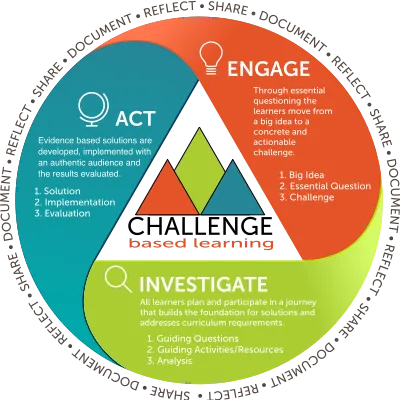
The framework
The CBL process.
Three phases, each with its own steps — from a big idea to a solution tested with a real audience.
- 1
Engage
Through essential questioning, learners move from a big idea to a concrete and actionable challenge.
- Big Idea
- Essential Question
- Challenge
- 2
Investigate
Learners plan and take part in a journey that builds the foundation for solutions.
- Guiding Questions
- Guiding Activities & Resources
- Analysis
- 3
Act
Evidence-based solutions are developed, implemented with an authentic audience, and the results evaluated.
- Solution
- Implementation
- Evaluation
Throughout the journey:Document · Reflect · Share